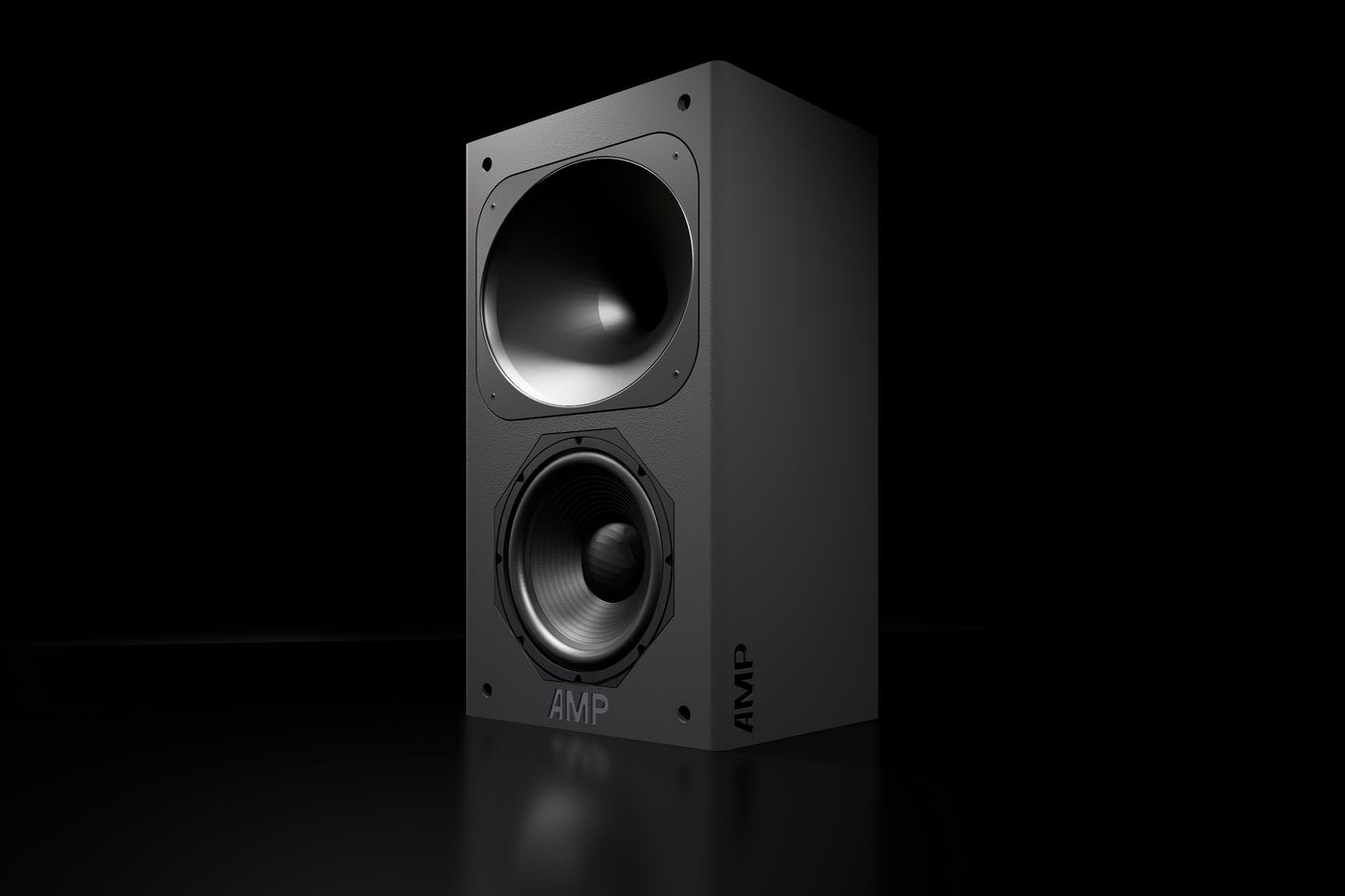
01 · The screen
The voice of the film.
Almost everything you hear in a film comes from behind the screen: every line of dialogue, most of the music, the action as it sweeps across the picture. The Cinema Pro 8 is built for that job. Voices stay clear and anchored to the actors, even at full cinema volume. Gunshots and explosions arrive with the speed and snap of a real cinema, without the harshness that makes you reach for the remote.
Inside is the layout of a commercial cinema screen channel, a compression driver on a horn above an 8-inch cone, voiced with the smoothness of high-end home audio.
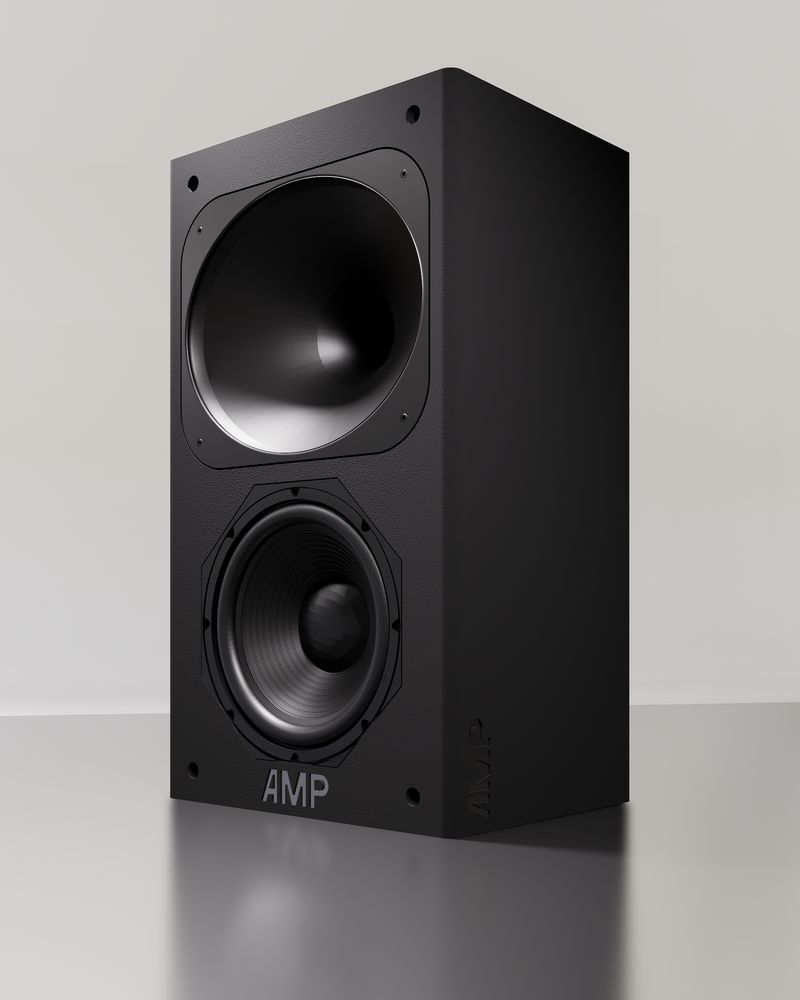
02 · Every seat
The same sound in every seat.
A constant-directivity horn covers 80° across and 60° high, and holds that pattern from the crossover upwards. The seats at the ends of the row hear the same balance as the one in the middle, and less sound spills onto the walls and ceiling to blur the image.
03 · Headroom
Effortless at reference level.
With a 500 W amplifier, the Cinema Pro 8 reaches the level commercial cinemas are calibrated to, RP22 Level 3, at seats up to 4 metres away, through the screen. Closer seats have headroom to spare, so the loudest scenes stay as composed as the quiet ones.
04 · Behind the screen
Built into the screen wall.
Cinema screen channels are flush-mounted in a baffle wall, and the Cinema Pro 8 is designed to be installed the same way. The wall tightens the bass and removes the reflection from the surface behind the speaker. VESA 100 × 100 mounting sets the height and angle, and 93 dB sensitivity makes light work of what the screen absorbs.
05 · The system
Crossed to the subwoofers.
Response extends to 70 Hz. Below that, the Cinema Pro 18S subwoofers take over, used in pairs or fours as RP22 recommends.